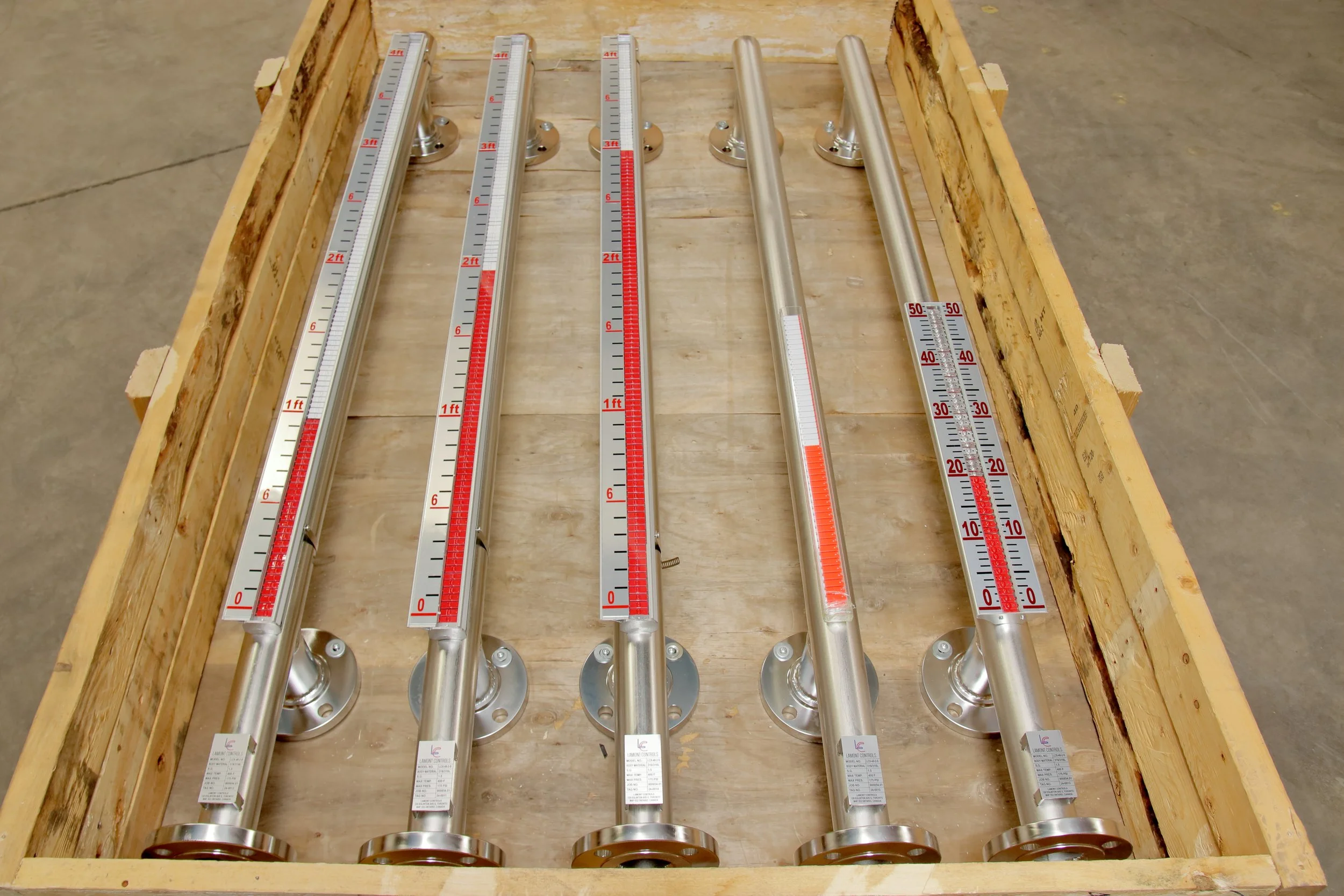
Fortimag™
Built for Extreme Service
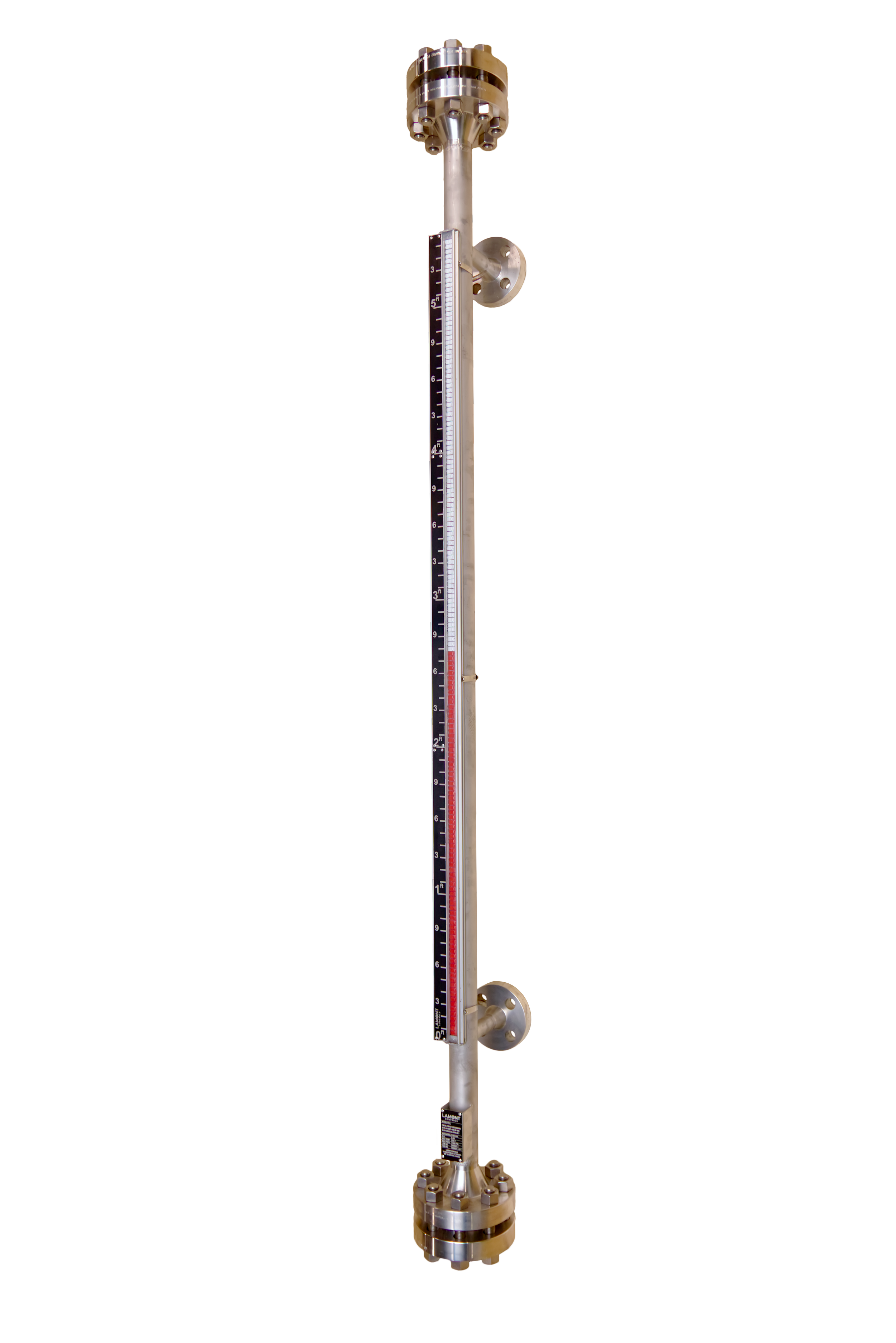
The ultimate defence against high pressure, thermal shock, and process volatility.
When standard instrumentation reaches its limits, Fortimag™ takes over. Designed for severe service, Fortimag is a heavy-duty magnetic level gauge engineered to perform reliably in extreme pressure environments where safety margins matter.
Unlike conventional designs that rely on slip-on flanges or lighter schedules, Fortimag features a heavy-duty, double-flanged chamber with weld-neck flanges as standard. This robust construction ensures superior mechanical strength and structural integrity, making it the definitive choice for critical Power Piping (ASME B31.1) and Process Piping (ASME B31.3) applications.
Designed to replace fragile sight glasses, Fortimag isolates the process fluid within a rugged, engineered chamber to eliminate the leak paths and breakage risks associated with traditional glass gauges in high-stress environments. To ensure long-term survivability during rapid level surges or startup shocks, every unit features a shock-absorbing double-flanged design with dual internal stop springs. This robust architecture is further supported by optional anti-vapor lock configurations for boiling services and full regulatory compliance—including available CRN registration—delivering the inspected reliability required for critical boiler drums and high-pressure separators.
Specifications at a Glance
Construction: Engineered alloys including SS304, SS316, Hastelloy, and Monel.
Pressure Rating: Full vacuum to 450 bar (6,525 psig).
Operating Temperature: Reliable performance from -200°C to +450°C (-328°F to +842°F).
Specific Gravity: Capable of measuring fluids with SG as low as 0.34.
Compliance: Engineered to ASME B31.1 / B31.3 and CSA W47.1 standards.
Measuring Length: Standard ranges up to 40 ft (12.2 m) with extended lengths available.
Indication: High-visibility magnetic flags with optional transmitter and switch integration.
Fortimag: Technical Architecture
Ultra-high-pressure magnetic level measurement designed for the most demanding process conditions.
Extreme Pressure and Temperature Capability
Fortimag magnetic level gauges are rated to 450 bar (6,525 psig) and operating temperatures from –200 °C to +450 °C (–328 °F to +842 °F), conditions that exceed the design limits of conventional magnetic level indicators.
The Fortimag Edge: Fortimag employs weld-neck flanges as standard on all pressure-containing connections. This design eliminates the stress concentrations inherent in slip-on or threaded flanges, providing full structural continuity with the piping system. Double flanged ends with dual internal stop springs protect the float assembly under rapid pressure transients and thermal shock.
Engineering Impact: Fortimag chambers are designed and fabricated to ASME B31.1 and ASME B31.3 standards. The gauge functions as a fully rated extension of the process piping system. CRN registration numbers are available where jurisdictional approval is required.
Code-Compliant Manufacturing and Quality Assurance
Critical-service applications demand rigorous material traceability, non-destructive examination, and code-compliant fabrication. Fortimag is manufactured to meet these requirements where standard commercial-grade instrumentation cannot.
The Magnamont Edge: The Magnamont chamber is designed for the easy integration of LevelSync™ transmitters and SurePoint™ switches. These accessories are externally clamped and magnetically actuated by the internal float, allowing for signal integration without additional vessel penetrations.
Engineering Impact: You achieve continuous 4-20 mA level measurement and point-level alarming while maintaining a fully sealed pressure boundary. Installation and calibration can be performed while the vessel is live, avoiding costly process shutdowns.
Boiling, flashing, and vaporizing service creates vapor entrapment beneath the float, causing erratic indication or complete loss of buoyancy. Standard chamber designs lack internal features to address this failure mode.
The Fortimag Edge: VaporGuard incorporates guide rods and a perforated baffle plate that allows vapor to bypass the float without disrupting buoyancy, while maintaining close magnetic coupling between the float and external indicator.
Engineering Impact: VaporGuard extends operational capability into cryogenic liquids, low-boiling-point hydrocarbons, and high-temperature condensate systems where conventional magnetic level gauges fail.
VaporGuard Anti-Vapor Lock Technology
Integrated Automation and Redundant Measurement
Fortimag chambers accommodate externally mounted magnetostrictive transmitters and magnetically coupled switches without additional process penetrations, allowing level measurement and control functions to be achieved through magnetic coupling with no direct contact with the process fluid.
The Fortimag Edge: For applications requiring redundant level measurement, Fortimag can be supplied with a dual-chamber design—primary chamber for float and visual indicator, secondary chamber for guided wave radar or magnetostrictive transmitter, providing independent level measurement using a different physical principle.
Engineering Impact: Dual-chamber designs eliminate single-point failure and provide measurement redundancy in critical applications—boiler drums, reactor vessels, and SIL-rated safety systems—while allowing maintenance of secondary instrumentation without interrupting primary level indication.
Built for the Harshest Process Conditions
From high-pressure separation to critical steam service, Fortimag delivers code-compliant level measurement where standard instrumentation cannot survive.
Chemical Processing
High-pressure reactors, distillation columns, and storage vessels handling corrosive or high-temperature fluids.

Fortimag is engineered for high-pressure separation, crude stabilization, and refining applications where standard instrumentation cannot survive. Its weld-neck flange construction and heavy-wall chamber design meet the mechanical integrity requirements of upstream and downstream facilities operating under extreme pressure and sour service conditions. Available in Hastelloy, Monel, and SS316 with optional ECTFE/PTFE linings for H₂S and CO₂ resistance.
Oil & Gas Production and Refining

Power Generation & Steam Services
Reliable level control is critical for the auxiliary systems that keep your plant running, including boiler drums, feedwater heaters, deaerators, and condensate receivers. Fortimag withstands the thermal cycling and vibration inherent in steam and water loops without the risk of leaks common to gasketed glass gauges. With ASME B31.1 construction options available, it provides a robust, long-life solution for your facility's critical utility infrastructure.
Industrial Steam Systems
High-pressure steam distribution, condensate return, and thermal oil heating systems in manufacturing facilities.
Pilot Plants & Research Facilities
Custom-engineered gauges for experimental process units, test loops, and R&D applications requiring precise dimensional tolerances.
Petrochemical Production
Ethylene/propylene plants, polymer reactors, and high-pressure polymerization units requiring extreme-service instrumentation.
Automation & Integration
Continuous Monitoring and Point-Level Control
Polysight magnetic level gauges support external automation and alarm functions through non-invasive integration with LevelSync™ magnetostrictive transmitters and SurePoint™ level switches. These accessories are externally mounted and magnetically actuated by the internal float, enabling signal integration without introducing additional wetted process connections or vessel penetrations.
Because transmitters and switches are non-wetted, they can be installed, adjusted, or serviced without opening the vessel, depressurizing the system, or interrupting operation. This preserves the integrity of the chamber while supporting modern control and monitoring requirements.

LevelSync™
Continuous Level Transmitters
LevelSync magnetostrictive transmitters provide continuous level measurement by sensing the position of the magnetic float through the chamber wall. The transmitter mounts externally to the gauge and provides a standard 4 to 20 mA output, with optional digital communication depending on configuration.
As a non-wetted device, the transmitter remains isolated from corrosive process media and can be installed or serviced independently of the gauge chamber.
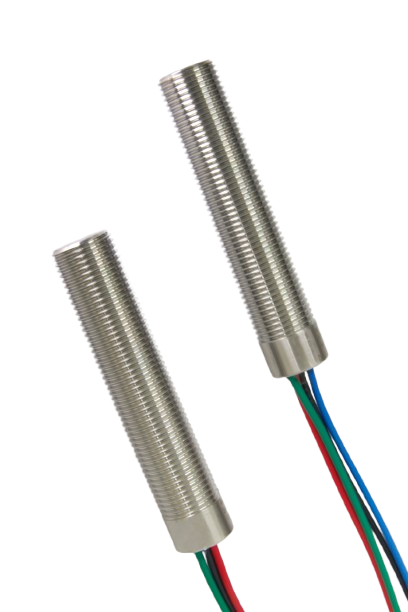
SurePoint level switches provide discrete high or low level indication for alarms and basic control functions. Switches are externally mounted and magnetically actuated as the float passes the setpoint location.
Setpoints may be adjusted along the chamber without process interruption, allowing flexible configuration during commissioning or future system changes.
Point Level Switches
SurePoint™
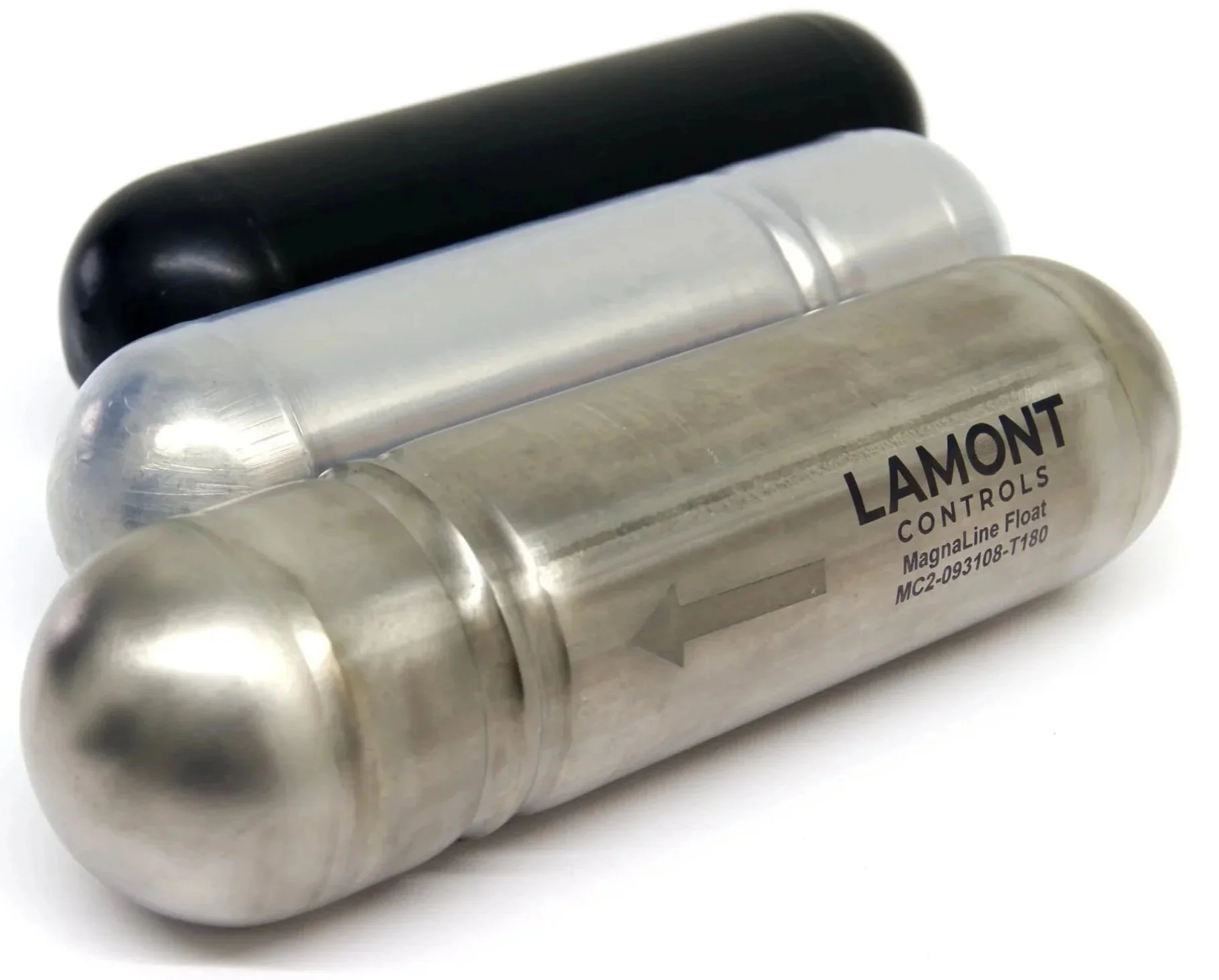
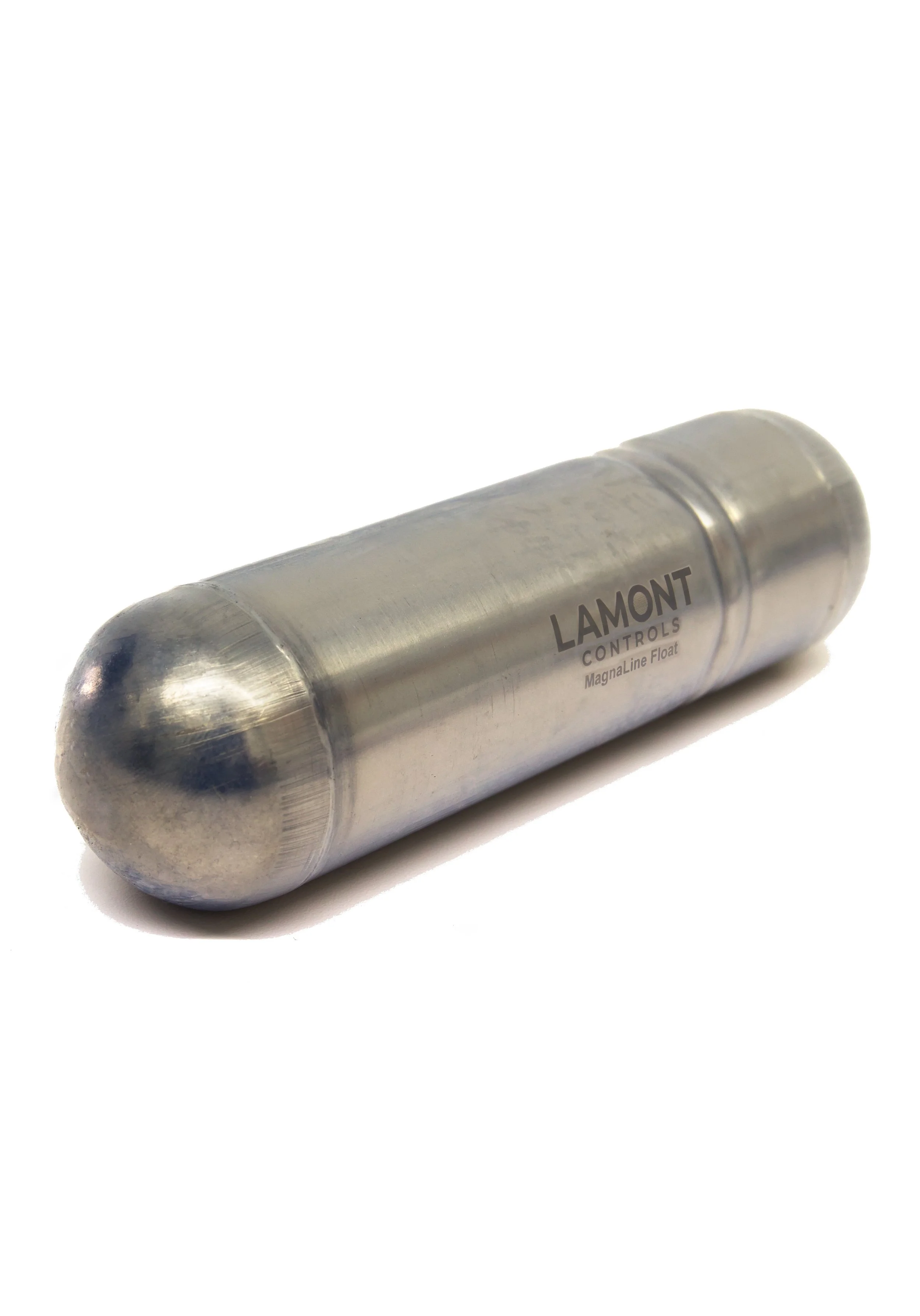
MagnaLine™ Float Technology
At the core of the gauge is the MagnaLine™ float. Engineered for stability, each float utilizes a high-strength, 360-degree magnetic flux assembly designed to maximize coupling force with the external indicator. This design ensures robust signal retention during standard operation and minimizes the risk of decoupling during process fluctuations.
Because accuracy depends on physics, every MagnaLine float is precision-weighted to the exact Specific Gravity (SG) and operating pressure of your fluid. Whether utilizing Titanium for high-pressure service or Stainless Steel for standard applications, we engineer the float to maintain the correct buoyancy relative to the fluid density, ensuring the indicated level matches the true process level.
Optional FloatSense™ Technology
Real-Time Float Integrity Monitoring
Eliminate the "blind spot" in level measurement. FloatSense™ provides early detection of float anomalies. In critical applications, this diagnostic feature warns operators if a float has been compromised or is failing to track, allowing for proactive maintenance before a process upset occurs.
-
![]()
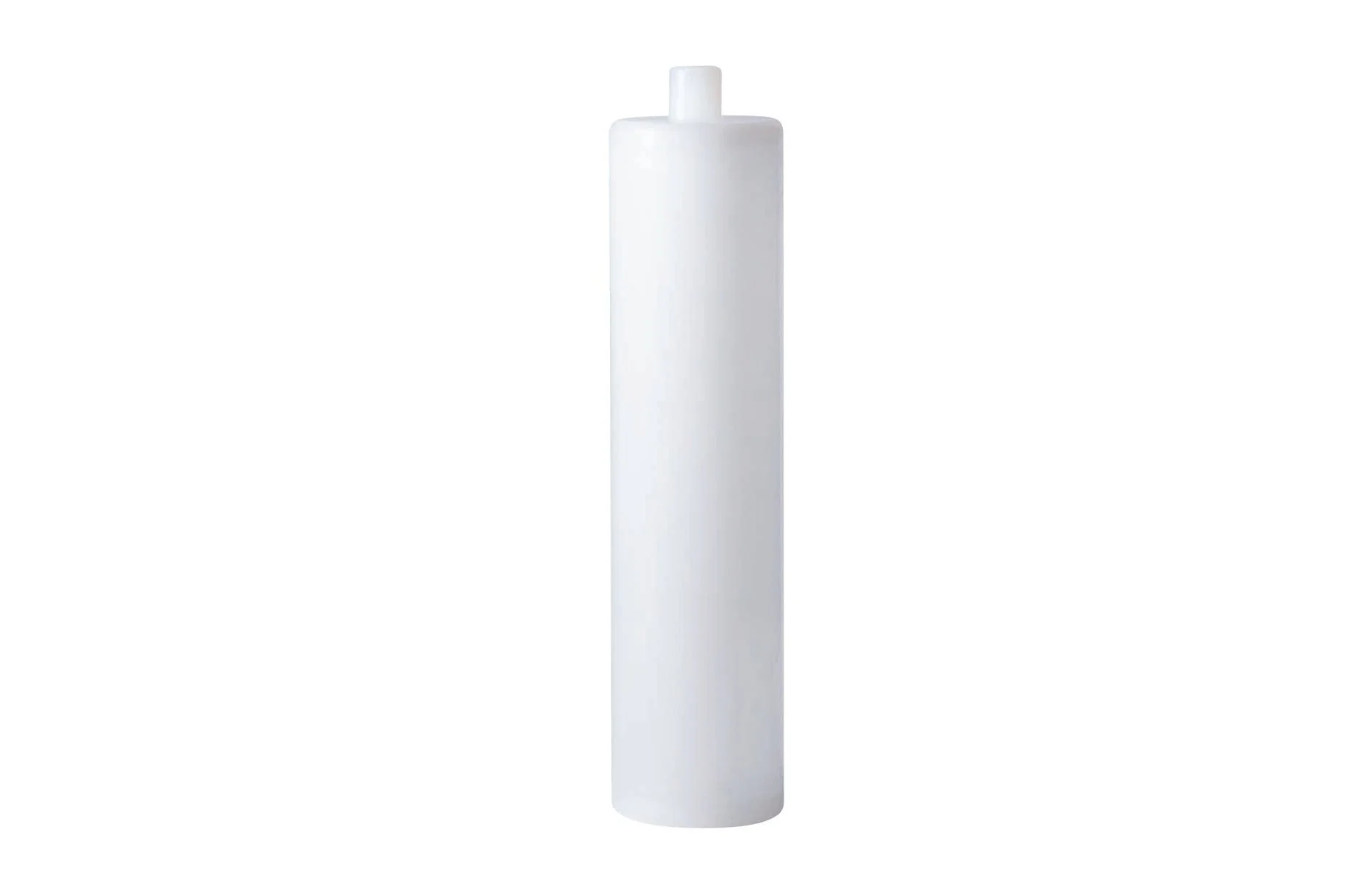
Solid Thermoplastic MagnaLine Float
Constructed from solid PVDF, PVC, or PP to provide impervious resistance to aggressive acids and caustics.
-
![]()
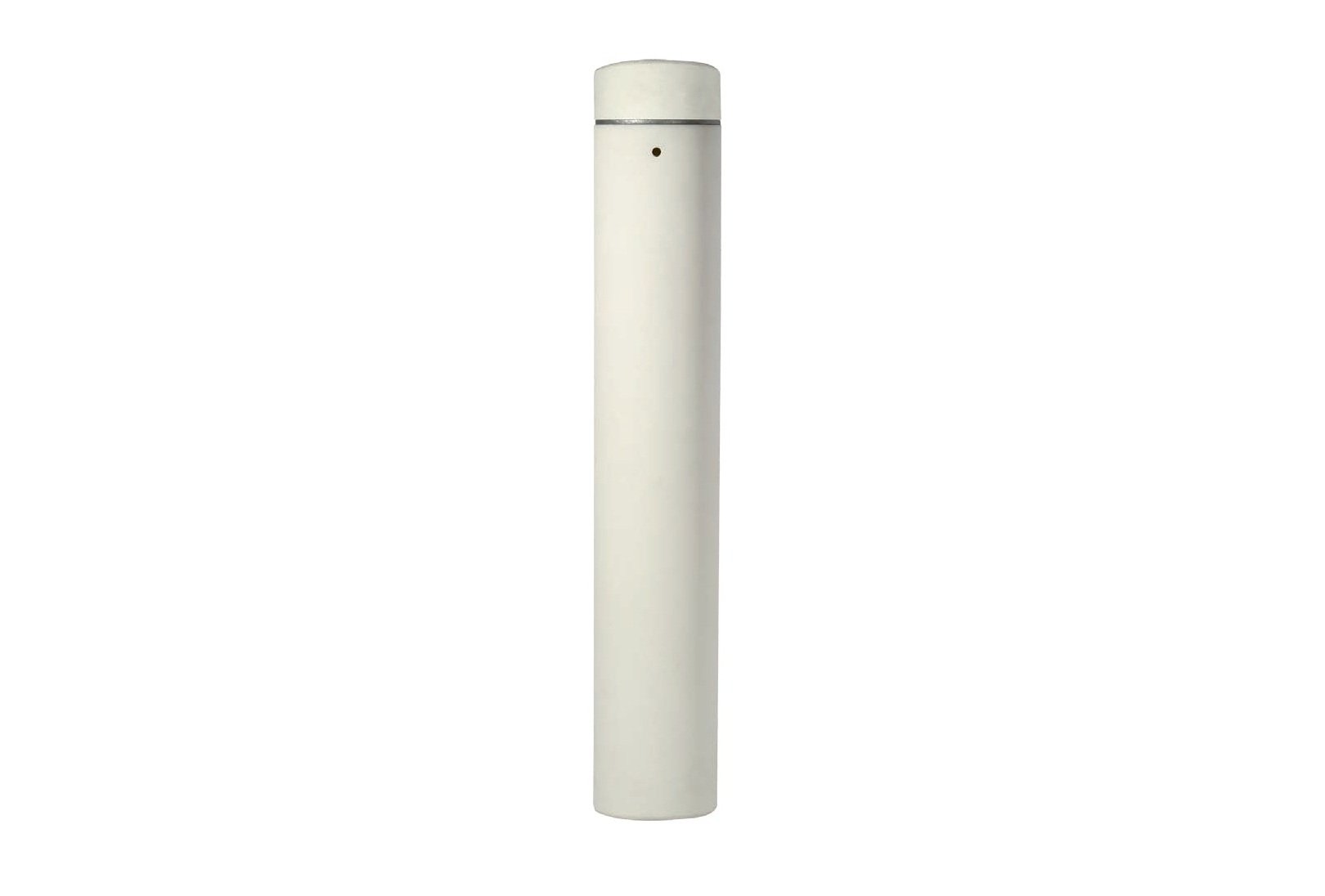
Syntactic Foam MagnaLine Float
Syntactic foam float for ultra-high-pressure process applications.
-
![]()
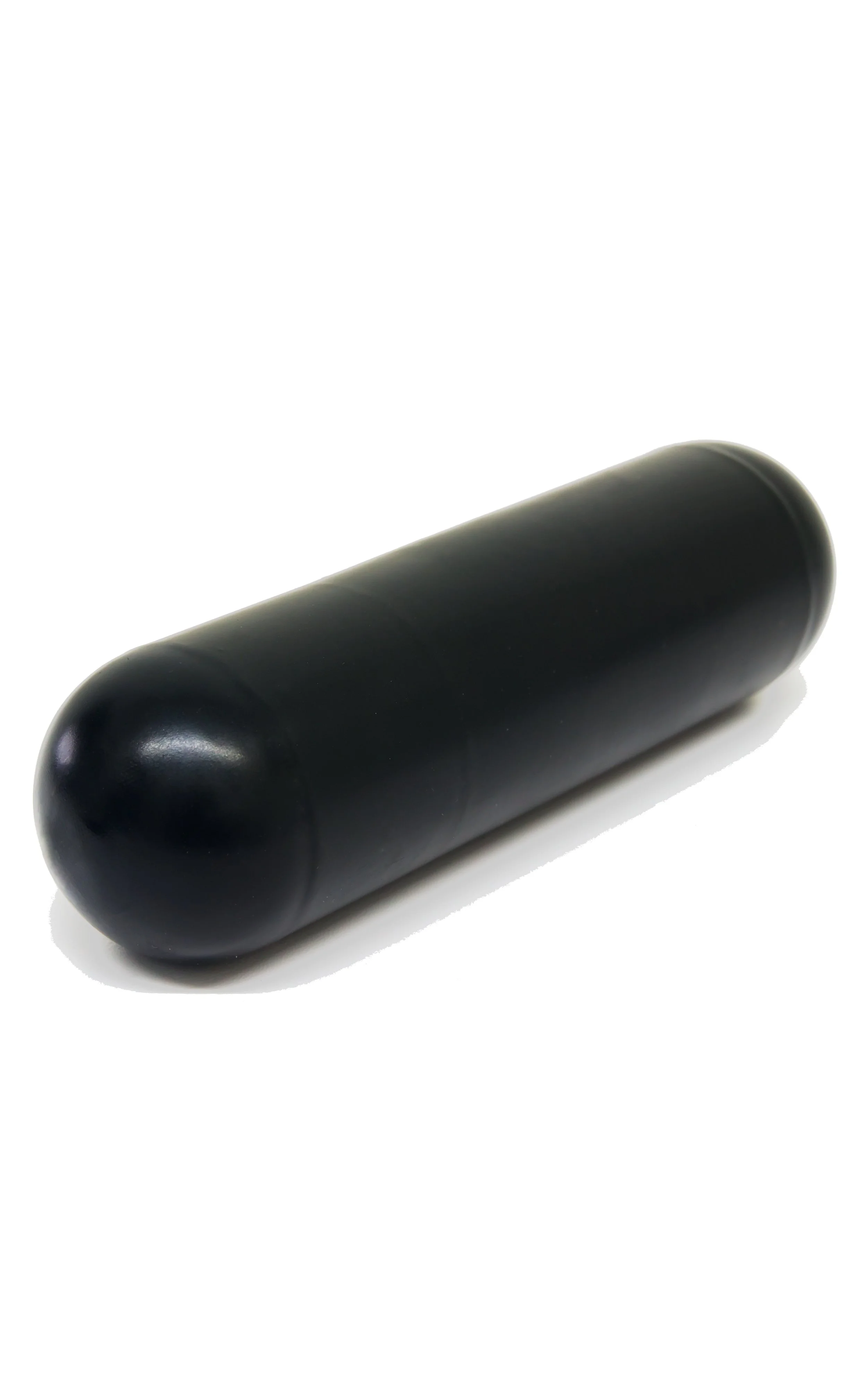
PTFE (Teflon®) Coated MagnaLine Float
PTFE-coated float for highly corrosive chemical service.
-
![]()
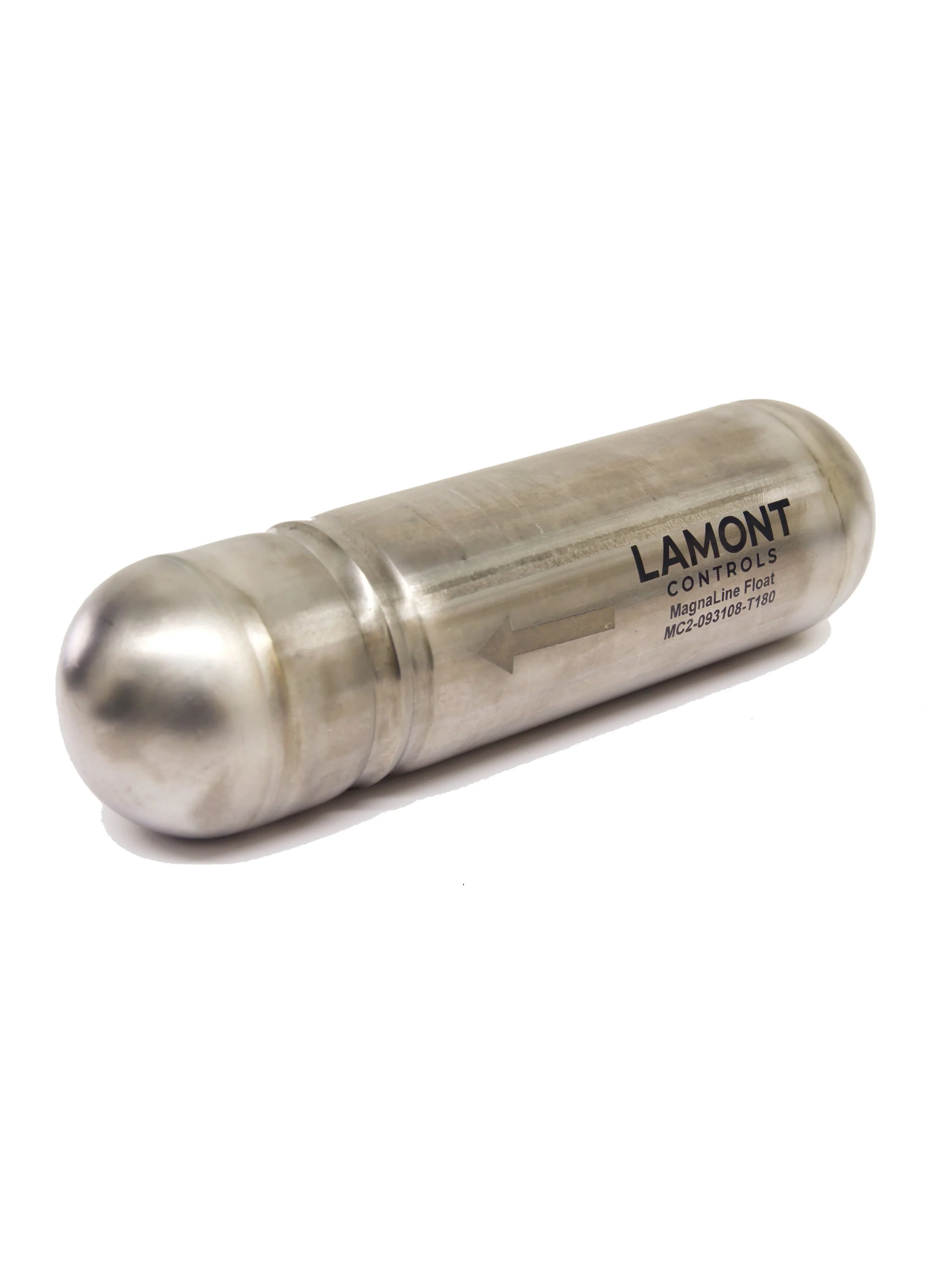
Titanium MagnaLine Float
High-strength titanium offering superior buoyancy-to-weight ratio for precision tracking in low-density and high-pressure applications.
-
![]()
Stainless Steel MagnaLine Float
Rugged 316/316L stainless steel construction designed for dependable performance in general industrial process services.
-
![]()
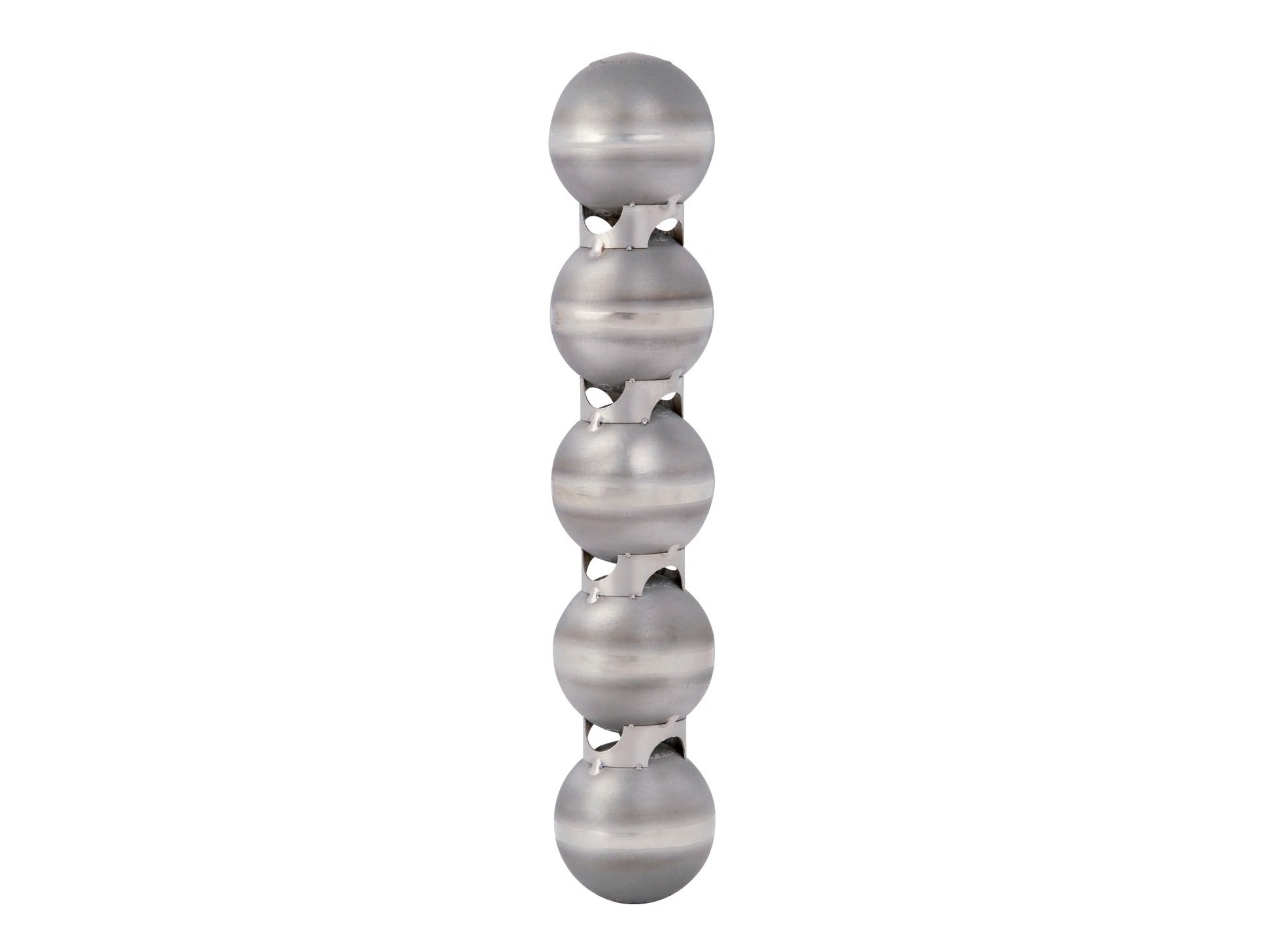
High-Pressure MagnaLine Float
Reinforced float with ball-segment geometry for high-pressure service.

ClearView™ Indicator System
High-Visibility Process Isolation
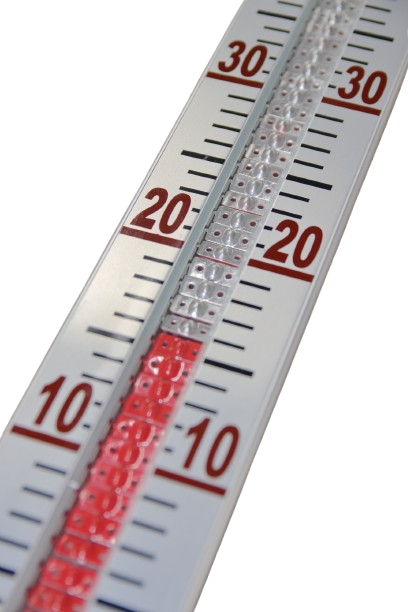
The ClearView™ system delivers clear, continuous local level indication without mechanical linkages or process penetration. Driven by the internal float’s magnetic field, the external indicator remains completely isolated from the process, ensuring reliable performance unaffected by pressure, temperature, or aggressive fluid conditions. Multiple indicator styles, robust housing materials, sealing options, and temperature ratings are available to suit a wide range of operating environments.
Custom Scales and Readout Units
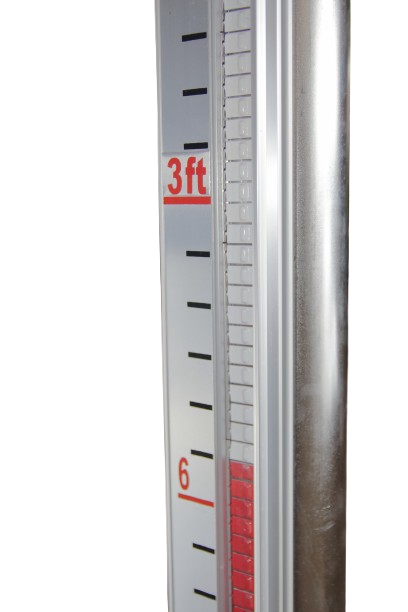
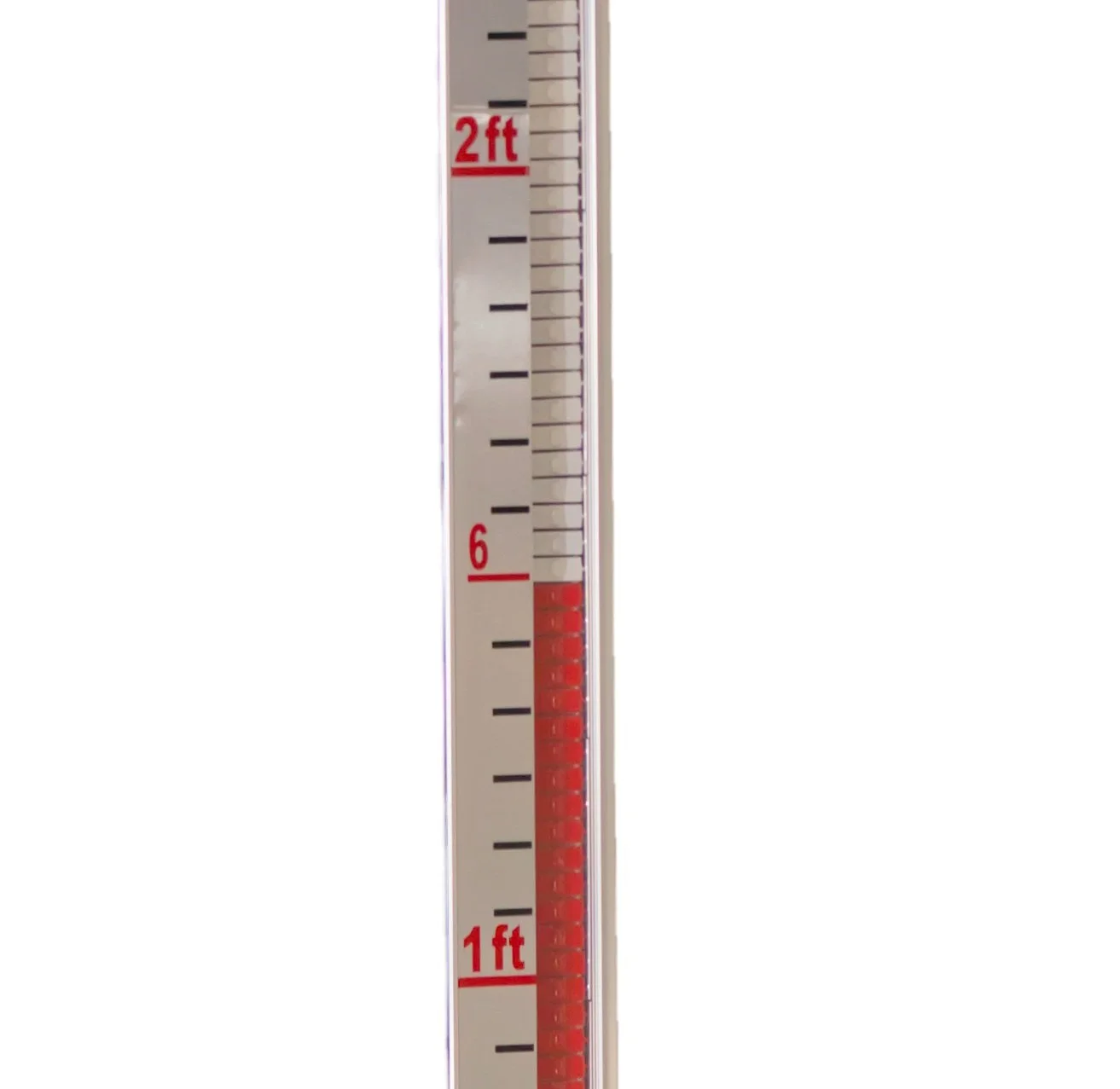
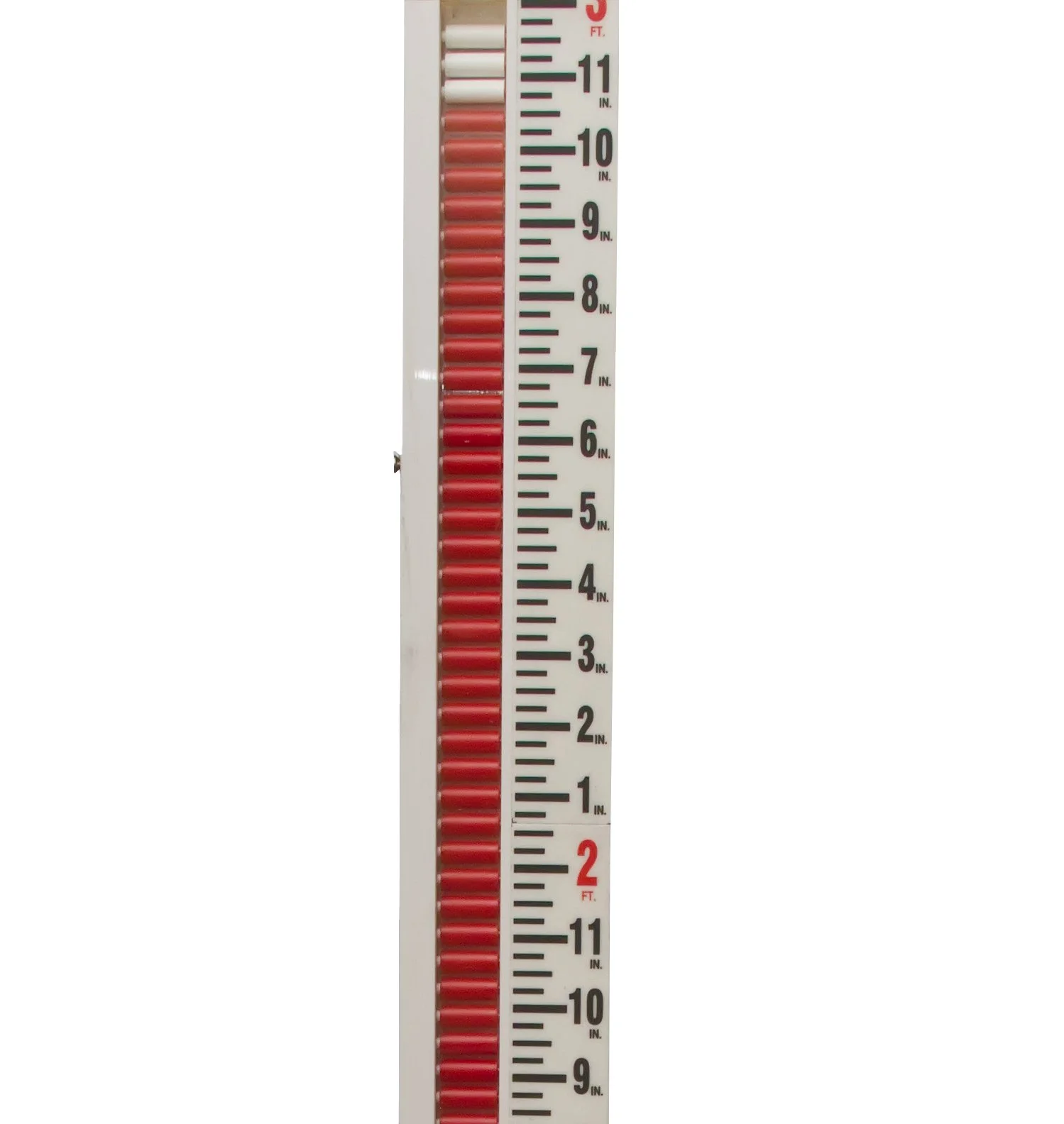
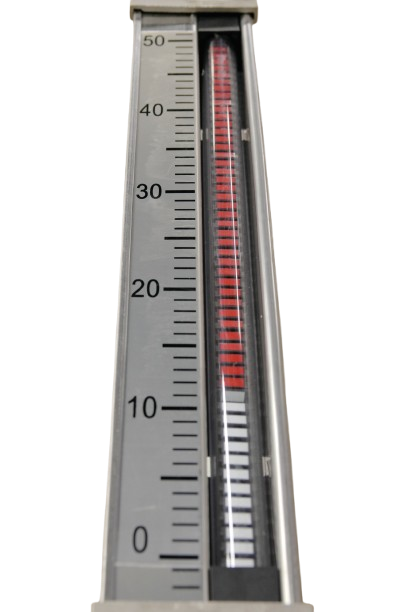
Indicator assemblies may be supplied with custom scale markings tailored to application requirements. Standard linear units are available in inches, feet, or metric, alongside dual scales or volumetric readouts (gallons, liters) derived from vessel geometry.
Custom scales are generated based on supplied drawings, strapping tables, or dimensional data to ensure accurate correlation between the indicated level and actual vessel volume. This enables direct interpretation of level information in application-specific units without manual conversion.
-
![]()
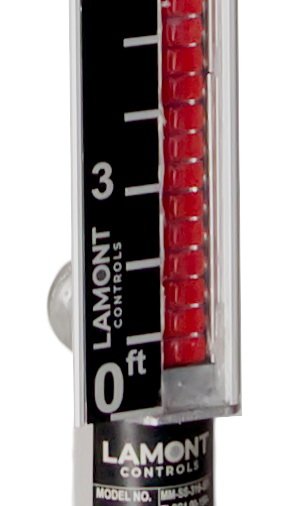
Black etched aluminum scale indicator with high-contrast markings, resistant to UV exposure, abrasion, and chemical attack for long-term industrial service.
-
![]()
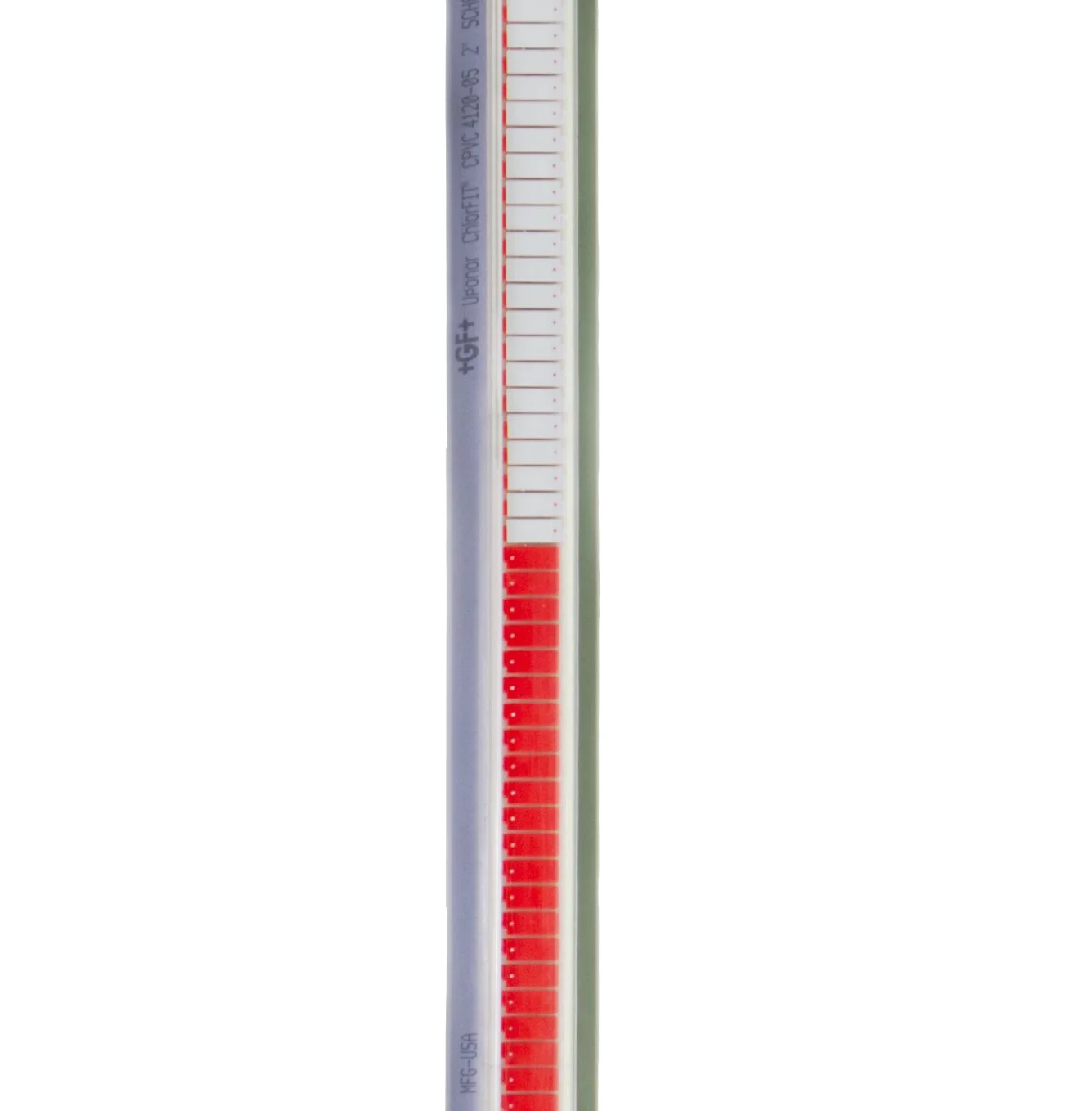
Transparent PVC indicator housing without scale, providing direct visual level indication for chemically aggressive, low-temperature service.
-
![]()
Silver etched aluminum scale indicator providing durable, high-visibility level indication for general industrial environments.
-
![]()
PVC roller-style indicator with integrated scale, designed for corrosive service at lower operating temperatures.
-
![]()
Hermetically sealed indicator assembly with stainless steel scale and frame, intended for harsh, humid, or washdown environments.
-
![]()
Indicator assembly with dual scale markings for simultaneous display of level in two units, such as height and volume, based on application data.

Principle of Operation
How It Works
1. Float Mechanism
A sealed MagnaLine™ float containing a permanent magnetic assembly is designed to remain buoyant within the process liquid based on the fluid’s specific gravity.
As the liquid level rises or falls, the float moves correspondingly within the chamber.
2. Magnetic Coupling
The float’s magnetic field is coupled to the external ClearView™ visual indicator mounted on the chamber.
This ensures the indicator moves synchronously with the float, providing an accurate representation of liquid level without direct process contact.
3. Visual Indication
The indicator is comprised of rotating flags or rollers in contrasting colors that change position to reflect liquid and vapor levels.
This provides clear, continuous visual indication without direct process contact, supporting reliable operation across typical pressure and temperature ranges.


Sealed and Non-Invasive Design
Fully Contained Process: The process fluid remains completely contained within the chamber.
No Wetted Indication Components: No glass, probes, or electronics are exposed to the process.
Leak and Emissions Reduction: Eliminates potential leak paths, emissions, and contamination risk.
Magnetic level gauges provide a sealed, non-invasive method of liquid level indication for industrial process applications where safety, reliability, and maintenance access are critical. Here’s why MLGs are the superior choice:
Why Use Magnetic Level Gauges?
Improved Safety Compared to Sight Glasses
No Fragile Glass: Removes glass components from the process line entirely.
Shatter Risk Elimination: Avoids failures caused by pressure spikes, thermal shock, or impact.
Reduced Exposure Risk: Minimizes personnel exposure to hazardous or corrosive fluids.
Low Maintenance and Long Service Life
Externally Mounted Components: Indicator assemblies remain isolated from the process fluid.
No Degrading Wetted Parts: Eliminates seals, gaskets, or electronics that deteriorate over time.
Simplified Inspection: Reduces inspection effort and overall lifecycle maintenance requirements.
Mechanical Reliability
Magnetically Coupled Operation: Uses a float and external indicator linked through magnetic coupling.
Non-Electronic Indication: No electronics, power supply, or calibration required for local indication.
Harsh Environment Performance: Maintains reliable operation where electronic sensors may struggle.
Technical Specifications
Chamber Configurations
Side-Side, Top-Bottom, Top-Side, Bottom-Side
Dual-chamber construction available with dedicated float chamber and secondary instrumentation chamber (available upon request)
Chamber Diameters
1.5", 2" (schedule and material per design requirements)
Larger diameters available upon request
Measuring Range
Standard lengths up to 40 ft (12.2 m), depending on material and support conditions. Extended lengths available upon request
Accuracy
Typical: ±10 mm (±0.4 in), subject to float design and application conditions
Specific Gravity Range
≥ 0.34 (minimum), subject to float design and application conditions
Pressure Range
Full vacuum to 6,525 psig (450 bar), depending on material, temperature, and configuration
Temperature Range
–200 °C to +450 °C (–328 °F to +842 °F), depending on chamber material and application conditions
Float Materials
Standard: Titanium
Optional: SS316, Hastelloy, Monel
Coated/Lined: ECTFE, PTFE, PFA, ETFA
Chamber Materials
SS304, SS316, Hastelloy, Monel,
Optional linings and coatings available upon request (e.g., ECTFE/Halar®, ETFE/Tefzel®)
Construction Codes & Approvals
Industrial Grade (CWB Certified CSA W47.1)
ASME B31.1 (Power Piping Standard)
ASME B31.3 (Process Piping Standard)
CRN registration numbers available
Process Connections
Flanged, threaded (NPT, BSP), or welded connections (Weldolet®, Sockolet®) DIN flanges and SAE fittings available
Standard sizes: ½", ¾", 1", 1.5", 2"
Larger sizes and custom connections available upon request, subject to application review.
Indicator Options
Standard Indicator Assemblies
Stainless steel flags, aluminum housing, no scale, max 300 °C
Stainless steel flags, aluminum housing, with scale, max 300 °C
Thermoplastic Indicator Assemblies
PVC flags, transparent PVC housing, no scale, max 80 °C
PVC rollers with PVC scale, max 80 °C
High-Temperature Indicator Assemblies
Stainless steel flags, aluminum housing with scale, max 450 °CSealed Indicator Assemblies
Hermetically sealed stainless steel scale and frame with PVC flags, max 80 °C or 300 °C
Hermetically sealed, argon-purged stainless steel scale and frame with PVC flags, max 80 °C or 300 °C
Optional -No indicator
Scale Options
Feet & Inches (Imperial)
Meters/Centimeters (Metric)
Percent (0–100%)
Volume indication (Gallons or Liters, based on customer-provided reference)
Custom
No Scale
Scale Material
Etched aluminum scale resistant to UV exposure, abrasion, and chemical attack. Marking compliant with MIL-STD-130N and related identification standards. Optional non-metallic scales available for enhanced chemical resistance.
Vent & Drain Options
Threaded (MNPT or FNPT) or flanged connections
Standard Sizes: ½", ¾"
Alternate connection types (e.g., SAE) and larger sizes available upon request, subject to application review
Surface Finishes & Treatments
Passivation: Full-immersion passivation in accordance with ASTM A380 / ASTM A967 (stainless steel components only)
Electropolishing: Internal and/or external surfaces in accordance with ASTM B912, where applicable
Mechanical Polishing: Internal and/or external surfaces available upon request
Optional: Painted or powder-coated external finishes for environmental protection or color coding
Testing & Quality Assurance
Full material traceability and documentation maintained throughout the manufacturing process
Non-Destructive Testing (NDE) performed in accordance with applicable project-specified codes and standards (e.g., ASME B31.1, ASME B31.3, or other governing codes), where required:
Visual Testing (VT) of welds and final assembly
Radiographic Testing (RT) of butt welds, where applicable
Dye Penetrant Testing (PT) of fillet welds, where applicable
Positive Material Identification (PMI) for alloy verification, where specified
Pressure Testing:
Hydrostatic testing conducted at 1.5 × design pressure, in accordance with applicable ASME standards
Additional inspection, testing, and documentation available upon request
Product Literature & Downloads
Technical documentation provided for application review, specification, and quotation support.
Product Overview
Specification Sheet