Deaerator level gauges For DA, boiler feedwater and condensate tanks
Built to ASME B31.1 or B31.3 as specified · Pressure tested before shipment · Test reports and MTRs available · Magnamont™ and Fortimag™ made in Canada
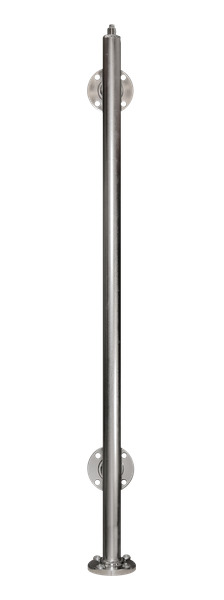
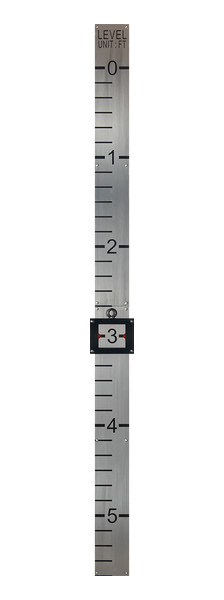
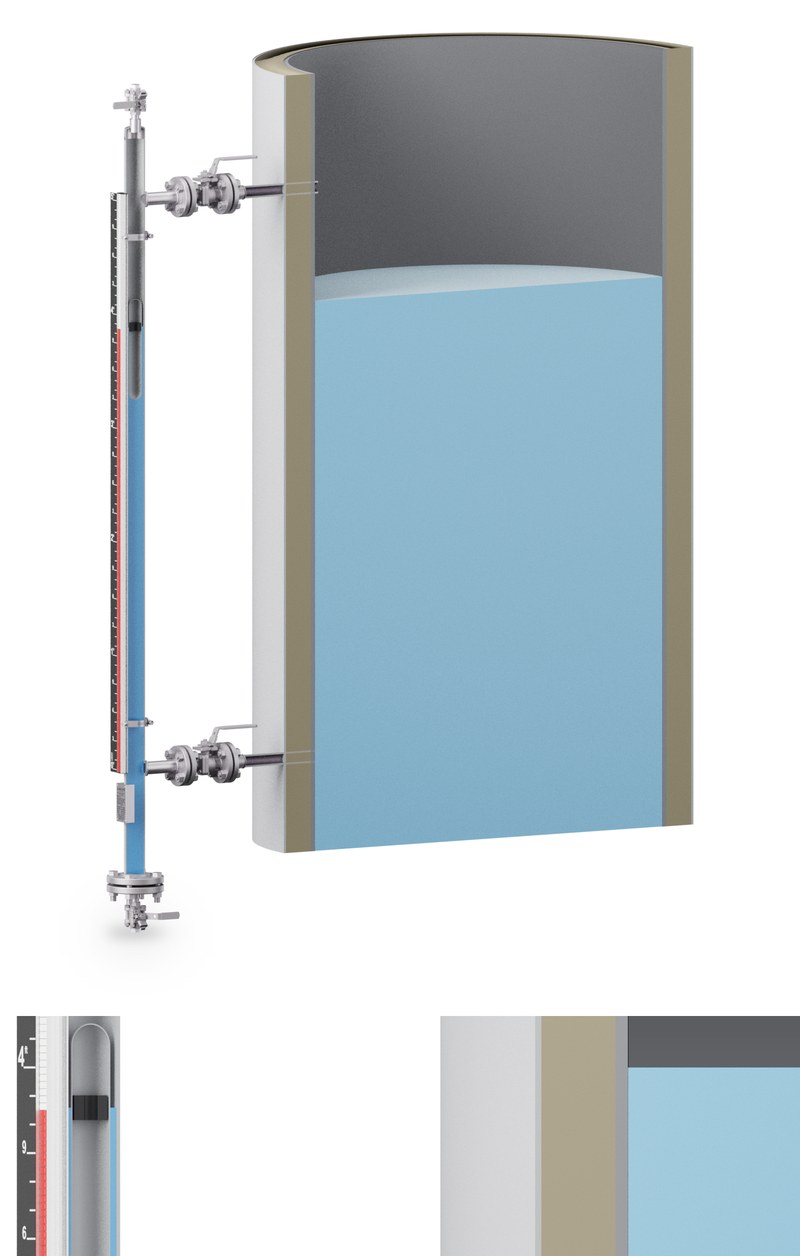
A deaerator level gauge works in hot, saturated feedwater. The water is lighter than cold water, it can flash when the pressure drops, and the vessel can draw a vacuum as it cools. Lamont builds Magnamont™ magnetic level gauges for deaerator storage sections, boiler feedwater tanks, condensate receivers and flash tanks, and Fortimag™ gauges for high-pressure feedwater heaters and flashing service. The float is weighted for the water at operating temperature, and the chamber is rated from full vacuum. SurePoint™ alarm switches and a LevelSync™ 4–20 mA transmitter mount on the same chamber. Lamont has supplied gauges for a boiler deaerator tank and for a boiler feed and condensate tank.
- Pressure, Magnamont™
- 3,400 psigfull vacuum to 234 bar
- Temperature
- −40…+842 °F−40…+450 °C
- Construction code
- ASME B31.1model code option B1
- Alarm points per gauge
- 1 to 8SurePoint™ SPDT switches
Ratings are confirmed at quotation.
Service conditions
Deaerator and feedwater service
- Hot water is lighter. Saturated water at a few psig has an SG of about 0.95. A float weighted for cold water (SG 1.00) sits deeper and reads low. The float is therefore weighted for the SG at operating temperature (see the engineering note).
- A cool chamber reads low. Cooler, denser water in an uninsulated chamber stands below the hot water in the vessel. An insulation blanket (option IB) keeps the chamber near vessel temperature and has a clear window over the indicator.
- Vacuum on cool-down. As the vessel cools, steam condenses and the tank can draw a vacuum. Every Lamont gauge line is rated from full vacuum. The gauge is specified to the vessel’s design pressure and temperature, plus full vacuum.
- Flashing. Saturated water flashes when the pressure drops, and vapour bubbles in the chamber can make the float unsteady. Fortimag™ VaporGuard™ (option VG) prevents vapour entrapment under boiling or flashing conditions.
- Iron oxide. Condensate carries magnetic particles that collect on the float’s magnet. A drain at the bottom of the chamber allows scheduled blowdown.
 12345678OverflowHighNormalLowLow-lowAA
- 1Steam to the deaerator head, above
- 2LevelSync™ 4–20 mA, HART®
- 3Isolation valve on each nozzle
- 4Insulation jacket (option IB) full-length, with a clear window over the flags
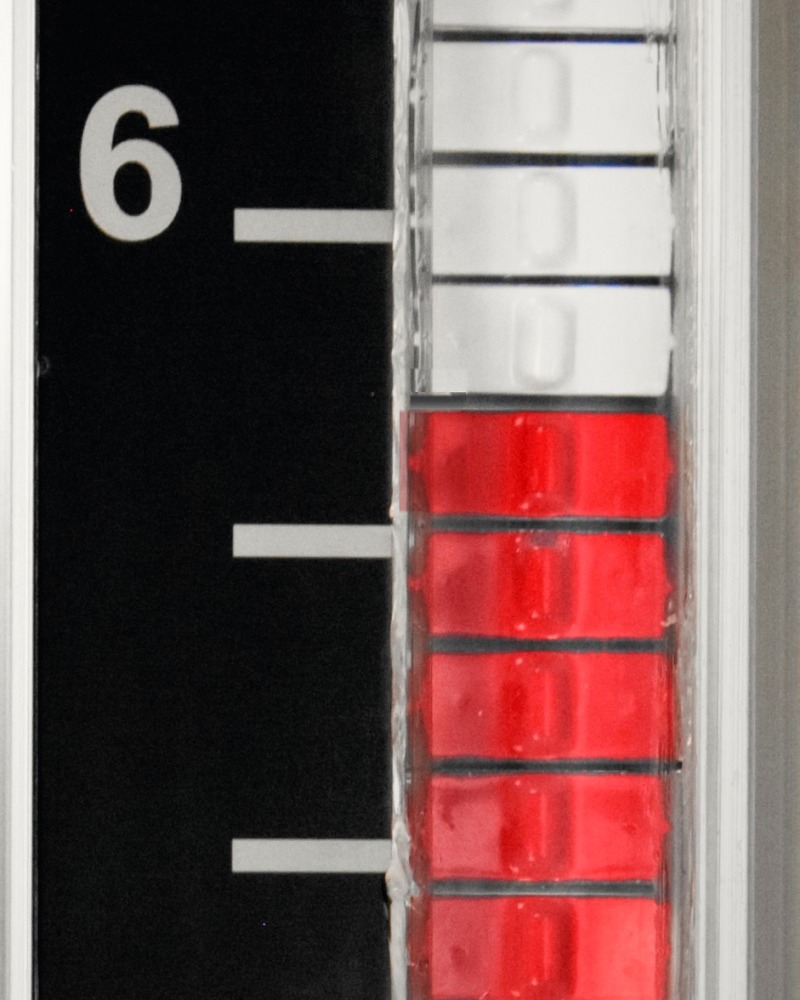
- 5ClearView™ flags red below the level (detail A)
- 6SurePoint™ SPDT at low and low-low
- 7Drain for blowdown
- 8Feedwater to the pump
Recommended build
Typical build for a DA or feedwater tank
| Gauge line | Magnamont™ for DA storage, feedwater and condensate tanks. Fortimag™ for high-pressure feedwater heaters and deaerators under thermal cycling and vibration, and for flashing service. |
|---|---|
| Chamber | Welded SS316, 1.5 in or 2 in, rated from full vacuum. Vent at the top and drain at the bottom for blowdown (threaded ⅛ to 1 in or flanged ½ to 1 in) |
| Float | MagnaLine™ titanium TI, weighted for the SG of the water at operating temperature, for example SG0.95 |
| Flange class | Selected for the vessel’s design pressure at design temperature: ANSI 150 to 1500 on Magnamont™; Class 2500 built to order on Fortimag™ |
| Construction code | ASME B31.1 B1 where power piping is specified; ASME B31.3 B3 or industrial grade IG where the owner’s specification and the governing code allow |
| Indicator | ClearView™ ISFS-300, rated 572 °F (300 °C), or IAF-450, rated 842 °F (450 °C) |
| Holding temperature | Insulation blanket with window IB; heat tracing HT for outdoor or idle tanks in cold weather |
| Alarms | SurePoint™ latching SPDT switches PLS-1 to PLS-8 for high, low and low-low alarms. The switch is rated −58 to +221 °F (−50 to +105 °C). This rating applies to the switch, which mounts outside the chamber. The mounting arrangement is confirmed at quotation |
| Signal | LevelSync™ MLT, 4–20 mA with HART®: standard mounting to 302 °F (150 °C) process temperature, thermal standoff from 302 to 527 °F (150 to 275 °C) |
| Testing and documents | Pressure tested before shipment; hydrostatic test at not less than 1.5 × design pressure where specified. Test reports and MTRs available. |
Switches that protect a feed pump or a boiler perform safety functions. The number, type and wiring of the devices are set by the owner’s standards, the boiler and piping codes and the authority having jurisdiction. Pressure and temperature ratings depend on materials, connections and configuration, and are confirmed at quotation.
Products for this service
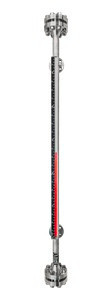
 Magnamont™SS316 magnetic level gaugeTo 3,400 psig and 842 °F
 Fortimag™Extreme pressure and temperature serviceTo 5,000 psig
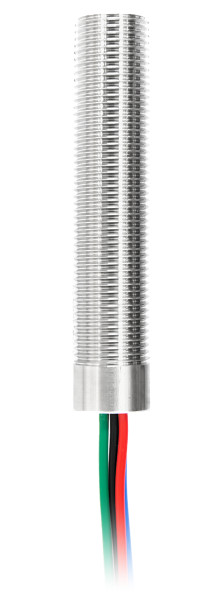 SurePoint™Magnetic point-level switchSPDT, latching, 1 to 8 per gauge
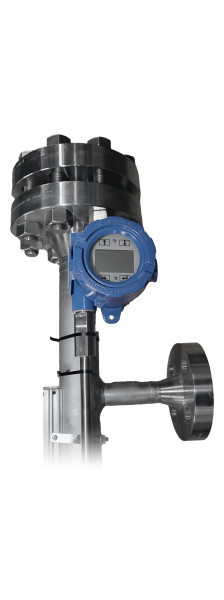 LevelSync™Magnetostrictive level transmitter4–20 mA with HART®
| With the quotation | Price and lead time, from the process conditions. The lead time runs from receipt of the purchase order and the signed approval drawing |
|---|---|
| After the purchase order | Approval drawing, for review and signature before fabrication |
| With the shipment | Material test reports (MTRs) and hydrostatic test reports, available. Certificate of origin, chamber-of-commerce certified, on request |
Material traceability is maintained throughout manufacturing. Quality and document requirements beyond those listed here are reviewed against the purchase specification at quotation. Attach the purchase specification, inspection and test plan or document list to the request.
Engineering note
Hot-water SG and the cool-chamber error
Float weighting for water at temperature
A MagnaLine™ float is weighted so that its magnet sits at the liquid surface for the SG stated on the order. Water at saturation is lighter than cold water, so a float weighted for SG 1.00 sits deeper in a deaerator and reads low.
| Temperature | Saturation pressure | SG |
|---|---|---|
| 212 °F (100 °C) | 0 psig | 0.96 |
| 227 °F (108 °C) | 5 psig (0.34 bar) | 0.95 |
| 250 °F (121 °C) | 15 psig (1.0 bar) | 0.94 |
| 300 °F (149 °C) | 52 psig (3.6 bar) | 0.92 |
| 350 °F (177 °C) | 120 psig (8.3 bar) | 0.89 |
Many pressurized deaerators operate at a few psig, so the stored water is near SG 0.95. From the stated operating pressure and temperature, Lamont weights the float for the SG at that temperature (model code position 06). During a cold fill, a float weighted for hot water rides slightly high; the reading corrects as the tank reaches temperature.
Worked example: an uninsulated chamber
 Vessel 227 °Fsteam spaceTrue level, 48 inChamber 150 °FAATrue level, 48 inChamber reads about 1⅜ in (35 mm) low48 in above the bottom connection
- Vessel 227 °F (108 °C), 59.4 lb/ft³ (952 kg/m³)
- Uninsulated chamber 150 °F (66 °C), 61.2 lb/ft³ (980 kg/m³)
- Same pressure at the bottom connection: the denser column is shorter.
Applications
Selected projects
Quotation
What to send for a quotation
- Tank type: deaerator storage section, feedwater tank, condensate receiver, or flash or blowdown tank.
- Operating and design pressure and temperature, and whether the tank is subject to full vacuum on cool-down.
- Centre-to-centre distance, connection size, flange class and configuration (side–side, top–bottom).
- Level points: overflow, high, low and low-low alarms, and a 4–20 mA signal if required.
- Construction code: ASME B31.1, B31.3 or industrial grade, as the owner specifies.
- Location: indoor or outdoor, and whether the tank stands idle in cold weather (insulation blanket or heat tracing).
- Replacing a gauge glass or another gauge: a photo of the nameplate and the existing centre-to-centre. See Retrofits.
Questions
Frequently asked questions
Which SG is specified for a deaerator float?
The SG of saturated water at the deaerator’s operating temperature: about 0.95 at 5 psig (227 °F, 108 °C). Lamont confirms the SG for the float from the stated operating pressure and temperature.
Why does a DA level gauge read lower than the level transmitter?
There are two common causes: the float is weighted for cold water, or the chamber is cooler than the vessel. Weighting the float for hot water and insulating the chamber correct most cases. Magnetic debris on the float is a third cause; blowing down the chamber through its drain clears it.
Can a magnetic level gauge replace the gauge glass on a feedwater or condensate tank?
On a deaerator storage section, feedwater tank or condensate tank, usually yes. Lamont builds the gauge to the existing centre-to-centre and connections. Send a photo of the nameplate and the existing centre-to-centre; see Retrofits.
Is Fortimag™ required for a deaerator?
Not for most low-pressure deaerator, feedwater and condensate tanks, where Magnamont™ has ample margin. Fortimag™ is built for high-pressure feedwater heaters and deaerators under thermal cycling and vibration, and for flashing service with VaporGuard™.
Can alarms and a transmitter mount on the same gauge?
Yes. SurePoint™ SPDT switches (1 to 8 per gauge) and a LevelSync™ 4–20 mA transmitter with HART® are externally mounted and magnetically coupled to the same float. They have no wetted parts, need no vessel nozzle, and are fitted at the factory or in the field.
Applications