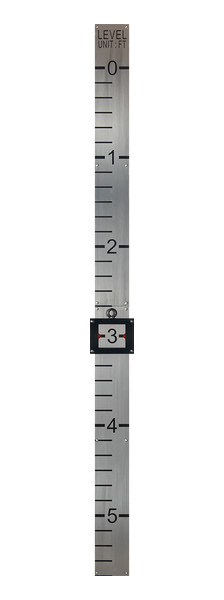

Chemical tank level gauges For acids, caustics, hypochlorite and water-treatment chemicals
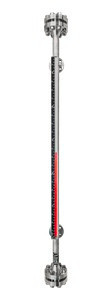
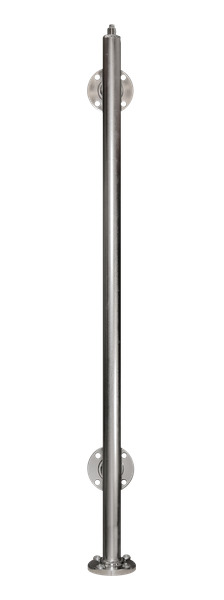
Chemical storage and day tanks hold sodium hypochlorite, hydrochloric and sulfuric acid, caustic (sodium hydroxide) and other treatment chemicals. These liquids corrode metal and are often much heavier than water, and the tanks stand in fumes and washdown. The wetted materials of the gauge must suit the chemical, and the float is weighted for the solution as stored. Lamont builds Polysight™ magnetic level gauges with CPVC or PVDF chambers and non-metallic floats for acids, caustics and salts, and Magnamont™ gauges in 316 stainless steel where the chemistry suits it. The indicator mounts outside the chamber, isolated from the process. SurePoint™ alarm switches and a LevelSync™ 4–20 mA transmitter clamp to the same chamber. Lamont has supplied Polysight™ gauges for acid and caustic service in FRP process vessels, and Magnamont™ gauges for a chemical producer’s process vessels.
- Pressure, Polysight™
- 150 psigfull vacuum to 10 bar
- Temperature
- −4…+248 °F−20…+120 °C, by chamber and float
- Chamber materials
- CPVC · PVDFsolvent- and fusion-bonded joints
- Minimum SG
- 0.59by float: PP 0.59, PVDF 0.79, PTFE 0.84
Ratings are confirmed at quotation.
Service conditions
Chemical storage and dosing service
- Wetted materials. The chamber and the float are in contact with the liquid. Polysight™ chambers are CPVC or PVDF; standard floats are PTFE, PVDF or polypropylene. With a standard non-metallic float, there is no metal in the wetted path.
- Heavy liquids. Many treatment chemicals are well above SG 1.00, for example about 1.52 for 50 % sodium hydroxide. The float is weighted for the SG of the solution at its stored concentration and temperature.
- Temperature limits. Each chamber material and each float material has its own maximum temperature. The lower of the two governs the gauge (see the engineering note).
- Low-pressure plastic tanks. Polysight™ connects with ANSI 150 flanges (standard) or NPT threads in 1, 1½ or 2 in (3 in: consult factory), and is rated from full vacuum to 150 psig (10 bar).
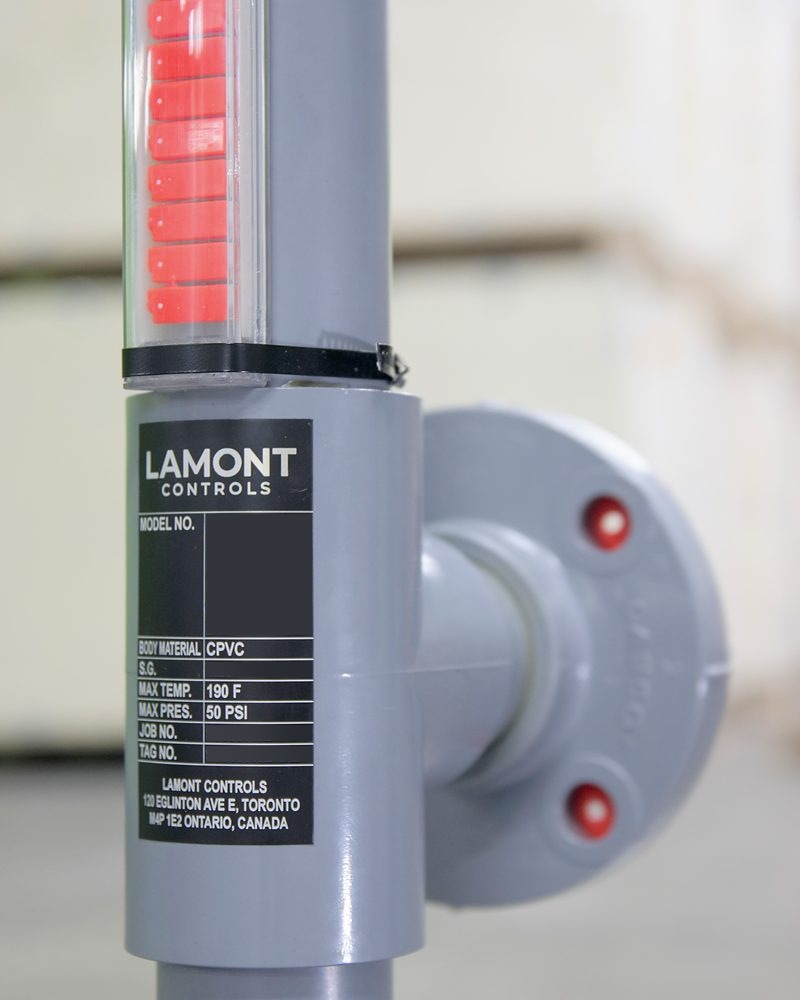
- Fumes and washdown. The PVC-housed IPVC-80 indicator is recommended where corrosive fumes surround the tank, and the sealed HS-80 for condensation, humidity or washdown.
- No glass. A sealed thermoplastic chamber replaces the sight glass. There is no glass to break under thermal shock or impact.
Recommended build
Typical build for a chemical tank
| Gauge line | Polysight™ for acids, caustics and salts. Magnamont™ in 316 stainless steel for solvents, caustics and hydrocarbons where 316 suits the chemistry; Hastelloy, Monel K-500, Inconel 625, coated or lined chambers: consult factory |
|---|---|
| Chamber | 2 in CPVC CPVC (standard) or PVDF PVDF for aggressive or hot corrosive service; industrial grade thermoplastic fabrication IG |
| Float | PTFE TF, standard in CPVC chambers, for hydrochloric acid and aggressive reducing service at low pressure. PVDF PV, standard in PVDF chambers. Polypropylene PP for general corrosive service |
| Connections | Flanged ANSI 150 (standard), FNPT or MNPT; 1, 1½ or 2 in (3 in: consult factory). DIN PN10 and JIS 5K on request |
| Vent and drain | Threaded FNPT (standard) or MNPT; ½, ¾ or 1 in |
| Indicator | ClearView™ IPVC-80, PVC flags in a PVC housing, rated 176 °F (80 °C). IPVC-120 with scale, rated 248 °F (120 °C). HS-80, sealed, for condensation or washdown |
| Scale | Feet and inches, metres, percent, or gallons or litres graduated to the tank’s volume |
| Finish | Natural; painted on CPVC for outdoor and UV service |
| Alarms and signal | SurePoint™ latching SPDT switches PLS-1 to PLS-8; LevelSync™ MLT, 4–20 mA with HART®. Externally mounted and magnetically coupled; no wetted parts |
| Testing and documents | Pressure tested before shipment; hydrostatic test with clean water at not less than 1.5 × design pressure (1 hour minimum) and a 24-hour water-fill leak test where specified. Test certificates available. |
Lamont states the wetted materials of each gauge on the quotation and the nameplate model code. Compatibility of those materials with the chemical, its concentration and temperature is confirmed by the user. Pressure and temperature ratings depend on materials, connections and configuration, and are confirmed at quotation.
Products for this service
 Polysight™Thermoplastic, for corrosive serviceTo 150 psig
 Magnamont™SS316 magnetic level gaugeTo 3,400 psig and 842 °F
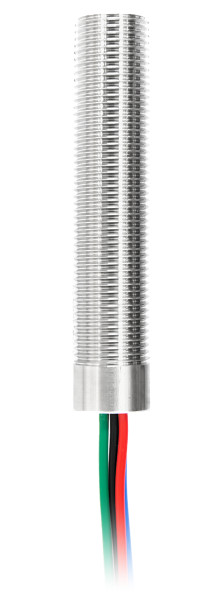 SurePoint™Magnetic point-level switchSPDT, latching, 1 to 8 per gauge
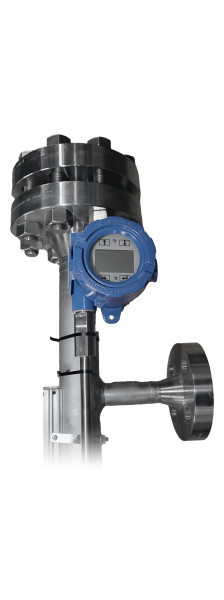 LevelSync™Magnetostrictive level transmitter4–20 mA with HART®
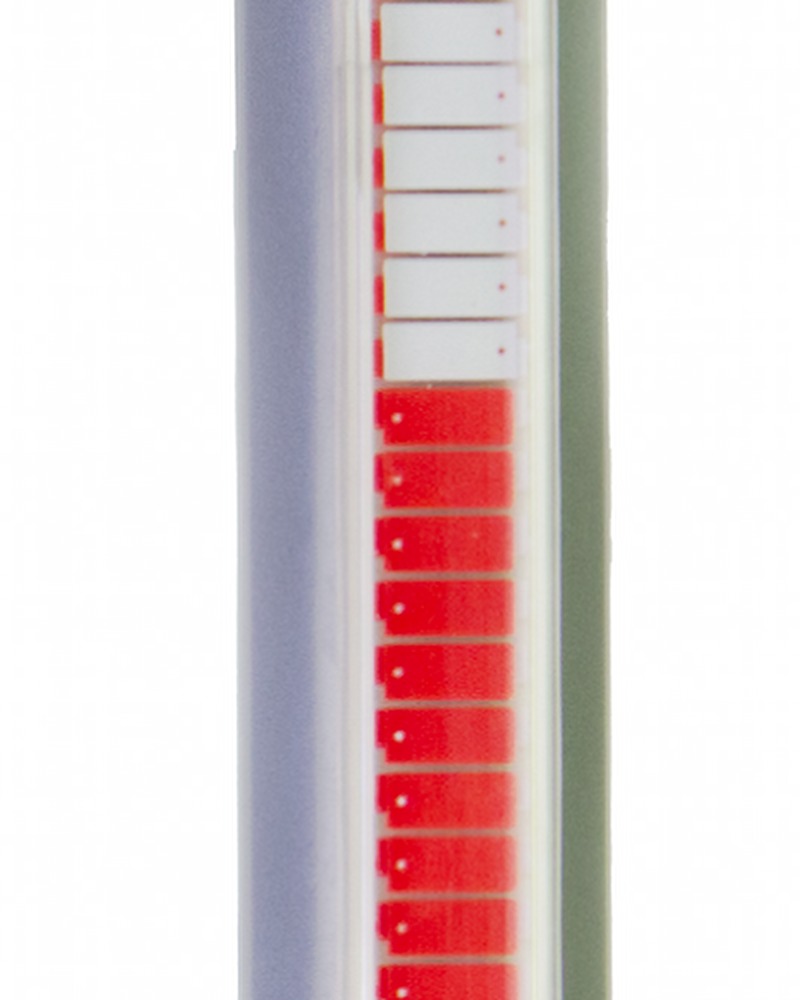
Engineering note
Temperature limits and float SG
Chamber and float temperature limits
Each wetted part has a maximum temperature. Where a chamber and a float are paired, the lower limit governs. The indicator mounts outside the chamber; its rating applies to the indicator only and is selected for the surroundings.
| Build | Chamber | Float | Governs |
|---|---|---|---|
| CPVC + PTFE (standard) | ~199 °F (~93 °C) | 248 °F (120 °C) | Chamber, ~199 °F |
| PVDF + PVDF (standard) | ~248 °F (~120 °C) | 212 °F (100 °C) | Float, 212 °F |
| CPVC + PP | ~199 °F (~93 °C) | 176 °F (80 °C) | Float, 176 °F |
Float weighting for the stored solution
A float weighted for water rides high in a heavy solution, and the gauge reads high. Specify the SG of the solution at its stored concentration and temperature. It is entered in model code position 06 (for example SG1.52).
| Chemical | Strength | SG, about |
|---|---|---|
| Sulfuric acid | 93 % | 1.83 |
| Sodium hydroxide | 50 % | 1.52 |
| Ferric chloride | 40 % | 1.42 |
| Hydrochloric acid | 31.5 % | 1.16 |
| Water | – | 1.00 |
The table gives SG for float weighting only; it is not a statement of material compatibility. SG changes with concentration. Where a tank is diluted or receives a different grade, the float is weighted for the SG of the liquid the tank holds. Polysight™ floats read liquids from SG 0.59 upward, so heavy chemicals are well within the range of every float.
Applications
Selected projects
Quotation
What to send for a quotation
- Chemical and concentration, and the SG of the solution as stored.
- Operating and design temperature, including any hot rinse, heat tracing or sun exposure.
- Operating and design pressure: atmospheric or the tank’s design rating.
- Centre-to-centre distance, connection size and type (flanged or NPT) and configuration.
- Surroundings: corrosive fumes, washdown or outdoor UV, for the indicator and finish.
- Level points: high and low alarms, and a 4–20 mA signal if required.
- Replacing an existing gauge: a photo of the nameplate and the existing centre-to-centre. See Retrofits.
Questions
Frequently asked questions
CPVC or PVDF: which chamber is specified?
CPVC is the standard Polysight™ chamber. PVDF is for aggressive or hot corrosive service and high-purity chemistry, to about 248 °F (120 °C). Lamont states the wetted materials of each gauge; the user confirms they are compatible with the chemical, its concentration and temperature.
Is there any metal in contact with the chemical?
Not with a standard float. The Polysight™ chamber is CPVC or PVDF and the standard floats are PTFE, PVDF or polypropylene, so with a standard non-metallic float there is no metal in the wetted path. The indicator, switches and transmitter mount outside the chamber.
What is the pressure rating of a Polysight™ gauge?
The chamber is rated from full vacuum to 150 psig (10 bar). The PTFE float is for low-pressure service, so Lamont states the rating of the complete gauge with the quotation.
Which SG is specified for a heavy chemical?
The SG of the solution at its stored concentration and temperature, for example about 1.52 for 50 % sodium hydroxide. The float is weighted for that SG; a float weighted for water would read high.
Can alarms and a 4–20 mA signal be added to a plastic gauge?
Yes. SurePoint™ SPDT switches and a LevelSync™ transmitter are externally mounted and magnetically coupled to the same float. They have no wetted parts, need no additional tank nozzle, and are fitted at the factory or in the field.
Applications