Marine tank level gauges For fuel day tanks, potable-water, sewage, ballast and hydrophore tanks
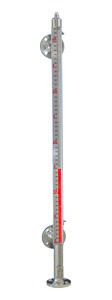
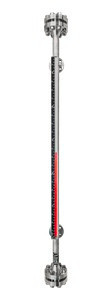
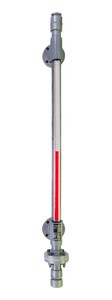
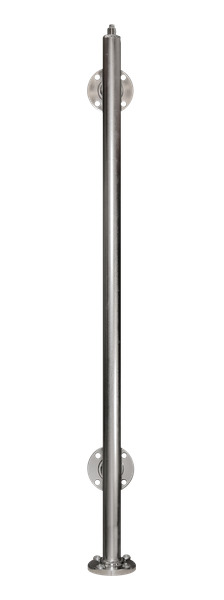
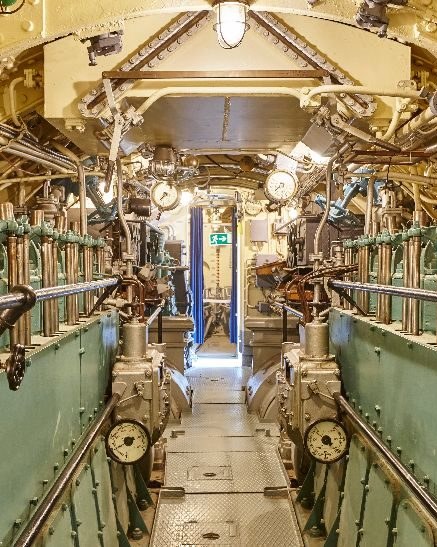
Shipboard tanks are exposed to vibration and salt air, and the crew needs tank contents in litres or gallons. A marine tank level gauge must stay sealed under vibration, contain no glass and match the flange standard of the shipyard that built the vessel. Lamont builds Magnamont™ magnetic level gauges in 316 stainless steel for fuel day tanks, potable-water, sewage and ballast tanks, and pressurized hydrophore tanks. They are available with ANSI, DIN or JIS flanges, scales graduated to the tank’s volume and SurePoint™ switches for alarms. Lamont has supplied gauges for a shipboard fuel day tank, for potable-water and sewage tanks on Great Lakes vessels, and for a drillship hydrophore tank.
- Pressure, Magnamont™
- 3,400 psigfull vacuum to 234 bar
- Flange standards
- ANSI · DIN · JISDIN and JIS special order
- Scale
- Volumelitres or gallons, to the tank
- Construction code
- ASME B31.1model code option B1
Ratings are confirmed at quotation.
Service conditions
Shipboard tank service
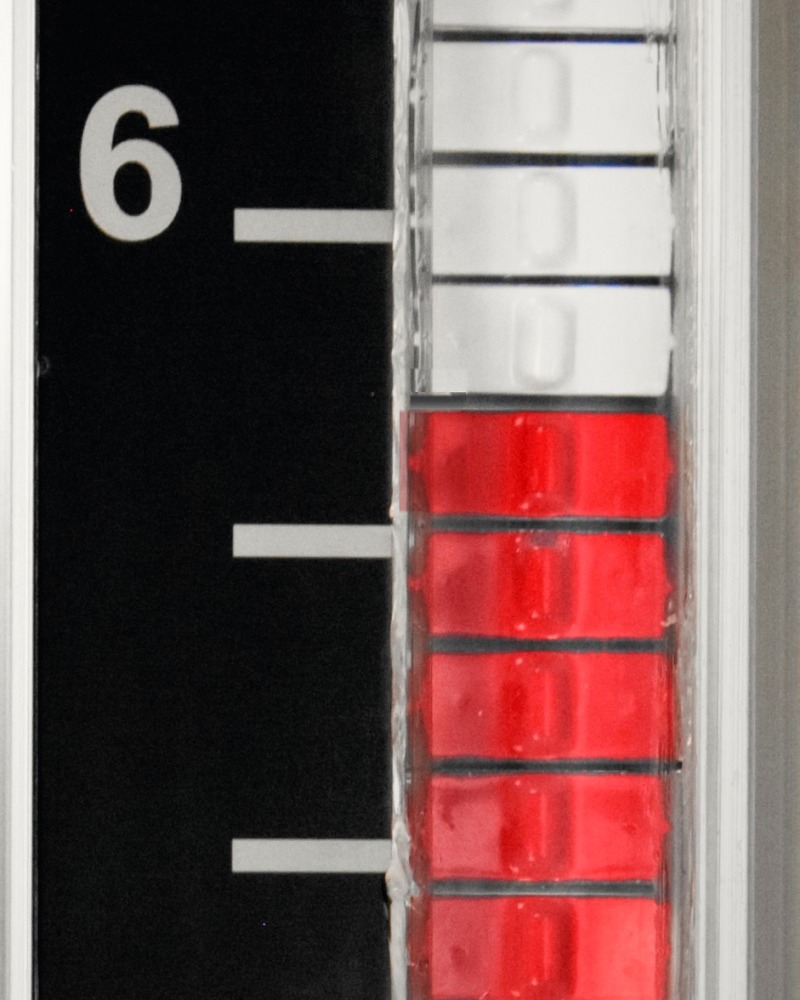
- Vibration and motion. The chamber is welded and all-metal, with no glass in the pressure boundary to crack as the hull flexes. The indicator is magnetically coupled to the float.
- Sea air. The 316 stainless steel chamber is passivated as standard or electropolished on its external surfaces (option EP). The etched aluminum scale resists UV, abrasion and chemical attack.
- Float weighted for the fluid. Marine diesel is about SG 0.85, fresh water 1.00 and seawater about 1.03. Each float is weighted for the fluid in its tank.
- Pressurized tanks. A hydrophore tank holds water under an air cushion. The gauge is specified to the tank’s design pressure and temperature, from full vacuum.
- Shipyard flange standard. Vessels built abroad commonly use DIN or JIS flanges. Magnamont™ is built with ANSI 150 to 1500, DIN PN10, PN16, PN25 or PN40, or JIS 5K to 20K connections (DIN and JIS special order).
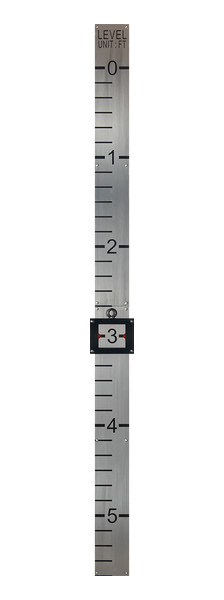
- Volume scale. A scale in litres or gallons, graduated to the tank’s volume, shows the tank contents directly (see the engineering note).
Recommended build
Typical build for a shipboard tank
| Gauge line | Magnamont™ for fuel, potable-water, sewage, ballast and hydrophore tanks. Polysight™ for seawater loops and treatment systems, on land and aboard |
|---|---|
| Chamber | Welded SS316, 1.5 in or 2 in; passivated per ASTM A380 / A967 or electropolished, external surfaces, per ASTM B912 EP |
| Float | MagnaLine™ titanium TI, weighted for the tank’s fluid, for example SG0.85 for marine diesel |
| Configuration | Side–side (standard), top–bottom, top–side or bottom–side; top-mount TM on a single flanged connection on the tank top |
| Flanges | ANSI 150 to 1500; DIN PN10 PN16 PN25 PN40; JIS 5K to 20K (DIN and JIS special order); threaded and welded connections also available |
| Scale | Litres LIT or gallons GAL graduated to the tank’s volume; metres, feet and inches or percent |
| Construction code | ASME B31.1 B1 or B31.3 B3 |
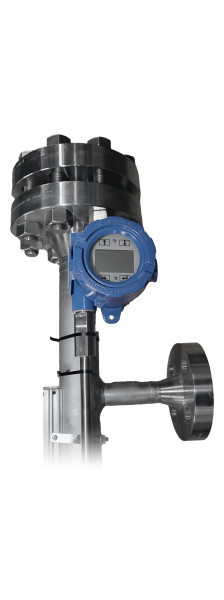
| Alarms and signal | SurePoint™ latching SPDT switches PLS-1 to PLS-8 for high and low alarms; LevelSync™ MLT, 4–20 mA with HART®, to the tank-monitoring system |
| Testing and documents | Pressure tested before shipment; hydrostatic test at not less than 1.5 × design pressure where specified. Test reports and MTRs available. |
Where the vessel’s classification society or flag state sets requirements for the gauge, state them in the request. Lamont confirms at quotation what it can supply. Pressure and temperature ratings depend on materials, connections and configuration, and are confirmed at quotation.
Engineering note
Level and volume in a horizontal tank
Contents are not proportional to level
In a vertical tank with straight sides, contents are proportional to level. In a horizontal fuel day tank they are not: the tank is narrowest at the bottom and top and widest at mid-height.
| Level, % of diameter | Contents, % of volume |
|---|---|
| 10 % | 5.2 % |
| 25 % | 19.6 % |
| 50 % | 50.0 % |
| 75 % | 80.4 % |
| 90 % | 94.8 % |
Applications
Selected projects
Quotation
What to send for a quotation
- Tank and fluid: fuel, potable water, sewage, ballast or hydrophore, and the SG.
- Design pressure and temperature; hydrophore tanks operate under air pressure.
- Centre-to-centre distance, connection size, flange standard (ANSI, DIN or JIS) and configuration.
- Scale: litres or gallons with the tank’s capacity table or dimensions, or metres, feet and inches or percent.
- Alarms and signal: high and low alarm points, and a 4–20 mA signal to the tank-monitoring system.
- Requirements of the classification society or flag state, if any apply to the gauge.
- Replacing a gauge or standpipe: a photo of the nameplate and the existing centre-to-centre. See Retrofits.
Questions
Frequently asked questions
Can the scale read in litres or gallons?
Yes. Scales are graduated to the tank’s volume in litres or gallons (option LIT or GAL). Send the tank’s capacity table, or its dimensions for a regular shape.
Are DIN and JIS flanges available for vessels built abroad?
Yes, as a special order: DIN PN10, PN16, PN25 or PN40, and JIS 5K to 20K. ANSI 150 to 1500 is standard.
Why use a magnetic level gauge instead of a sight glass on a fuel tank?
A magnetic level gauge has no glass in the pressure boundary. A welded, all-metal chamber replaces the glass assembly, which suits vibration and sea air. The indicator mounts outside the chamber, isolated from the fuel.
Can an existing tank gauge on a vessel be replaced?
Yes. Lamont builds the replacement to the existing centre-to-centre and connections. Send a photo of the nameplate and the centre-to-centre. See Retrofits.
Can a high-level alarm be added to a fuel tank gauge?
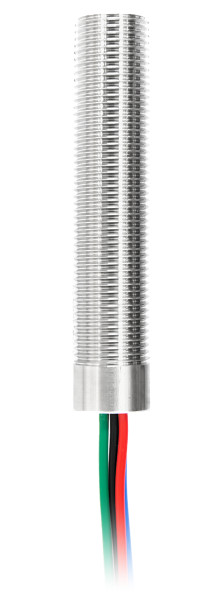
Yes. SurePoint™ SPDT switches (1 to 8 per gauge) clamp to the outside of the chamber and are set by sliding them along it. A LevelSync™ transmitter adds a 4–20 mA signal from the same float.
Applications